“I went to Gross High School and graduated in 1987. I probably didn’t really think seriously about this job until my senior year. Chief Olson—Dan Olsen—was in my class, and he had wanted to do this from a very young age. He kind of got me interested in it, but I was too busy playing sports. I played everything, but mostly baseball. I played varsity baseball for two years.
After high school, I went out to Kearney. I did a lot of growing up out there and earned a lot of credits. That was the first time I ever took the fire test. I came back and took it, but I wasn’t ready. I did terrible.
After that, I went to Southeast Community College and got an Associate’s Degree in Architectural Technology. I went to work for Alvine & Associates as a draftsman in the electrical department. I was drawing electrical plans for buildings. My first drafting job was actually on the Lied Jungle, where I drew steam piping for the humidity system around big support columns. I worked with some really smart engineers and learned a lot.
Marty and I got married in 1990. Her dad, Bob Warsocki, was an Assistant Chief at the time. He retired that same year. After we got married, I really got interested in firefighting. I had a good job drafting, making decent money, but everything was switching to computers, and my wages kind of hit a dead end unless I went back to school. I was going back for engineering, but I kept testing for the fire department.
The first time I took the test seriously, I finished 105th and didn’t get hired. I took it again and got hired in 1996, in the second class that year. There were 18 of us, plus four Millard guys, before the merger.
We trained at Abbott Drive. I was assigned to Aerial 1 on B-Shift. Bob Herbst was my captain. Bob Zeleny drove, and PJ Driscoll and Jim Anderlik were there too. My first fire on the job was the Falstaff Brewery—a 3-Alarm. It was an abandoned building, and I remember grabbing a few of those leftover bottle caps that used to have puzzles on.
My first year as a candidate, I made five multiple alarm fires. My second year, I made 26 working fires. I just happened to be in the right place at the right time.
I wasn’t a firefighter very long before I started driving. I got T’d into 21s, and to stay there, I started driving at about 18 months. It was a big pay jump. I had taken a pay cut to come to the fire department, so I wanted that. I took the test early and made driver. I loved driving. That’s probably still my favorite position. You had responsibility, but you weren’t in charge of people.
I drove Engine 21-B for about eight years and was there over ten. I learned a lot. Comstock and Koenig were my captains, Mark Driscoll for a while, Wayne Ruff on the truck, Ron Brill. I learned so much from those guys. A lot of good memories, a lot of laughs, and a lot of good work. I saw them do some amazing things.
One fire I’ll never forget was up north. I was driving. The whole house was rolling. We were pulling bodies out, and there was a guy standing next to me smiling. Turns out he had poured gasoline on a woman and lit her on fire. She ran through the house spreading the fire. That’s a memory that sticks with you.
Another was the bus fire at 60th & L. It was a big metal building, heavy smoke, not much fire. We were lucky no one died. Guys were wandering around inside with no walls, no hose line, vibroalerts going off. I learned a lot from that one.
Eventually I made Captain. I roved for a bit, then went to Aerial 53-B. I had good people there, but that station made me sick. Because of the air, the mold, I had a runny nose every day, so I transferred out.
I went to Engine 2 on A-Shift, then to Engine 33-B. That was a great house. Seth Gruber, Wyvie Jones, Mike Davenport driving. When Wyvie was gone, I had Rob Laux. We had great candidates. Chief Mancuso was the Battalion Chief. We had a lot of fun there.
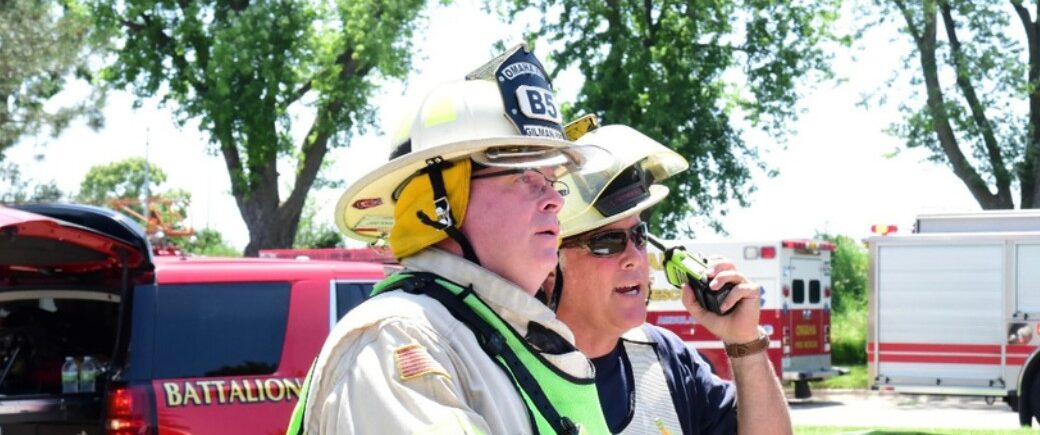
Then Hazmat moved in and I lost my spot, but shortly after that I got promoted to Battalion Chief, so it didn’t really matter. I started in the bureau, then went to Battalion 7, and eventually ended up at 52s. I’ve been there for about 13 and a half years.
I always tell guys, if you can find two to four stations where you really connect with people, you’re lucky. Every promotion is a transition, but I found I connected with people who put their families first. Those were the places I fit.
Over the years, I’ve seen a lot. As a Battalion Chief, it’s been a lot of major incidents. The Elkhorn floods—I was out there in Battalion 7. We had Blackhawks pulling people out of the water. Then the tornado out there, where houses were flattened. Watching people crawl out of their basements like zombies—that’s burned into my brain. And no fatalities. That’s amazing.
The riots—I was the incident commander. Being in the command post and hearing shots fired and someone hit—that was stressful.
When I think about making a difference, it’s EMS calls. The times you do CPR and that person walks out of the hospital. I remember one with Steve Crnkovich—lady in her 40s coded. We shocked her and got her back, and Steve goes, “I don’t know what to do—what’s the protocol when it works?” We laughed, but that sticks with you.
If I had advice, it’s be diligent. This job can take you out at any moment. We lost Captain John Goessling just days after I started. That changed this department forever. There’s also a cost to this job. Cancer, suicide, off-duty deaths. Too many guys are gone too soon. Take care of yourself. Keep your gear clean. Wear your mask, even when it’s a pain.
Trust is everything. Trust with the citizens, trust with your coworkers. Protect it. It’s fragile. Treat people with respect. Don’t judge. It’s their worst day—we’re just there to help.
I’ve been blessed. I’ve worked with incredible people. A lot of laughs in the firehouse. Especially these last 10 to 13 years—it’s been fun. Good battalion, good captains, people working together. I’m honored to have been a part of it.
Now I’m retiring. I’ll be doing what I do on my days off—woodworking, gardening, traveling a bit. We’ll take care of my parents. Maybe head to Nashville in the fall. I’ll still stay connected. But it’s time. I started April 8, 1996. That was my time. Now it’s theirs.”


Comments