Research for the Pioneer Hook and Ladder Quarterly often begins with a simple question. Occasionally, that question leads somewhere much deeper.
“The Kidder Fire” began that way.
Captain Dustin Guzman of Ladder 30 (B Shift), while walking in his neighborhood, met David Casey. In conversation, Dustin learned that David’s father, Pat Casey—a former Omaha firefighter—had recently passed away. The family hoped to locate a photograph of Pat at a fire scene. Soon after, David’s sister, Maureen, provided a lead: an Omaha World-Herald photograph dated May 28, 1963.
Dustin brought the request to the Omaha Firefighters Historical Society. What followed was anything but simple.
A routine inquiry to Michelle Gullett, Archive Director at the Omaha World-Herald, opened the door to a largely forgotten fire—one that would permanently alter the lives of four young boys and leave a lasting imprint on everyone connected to it.
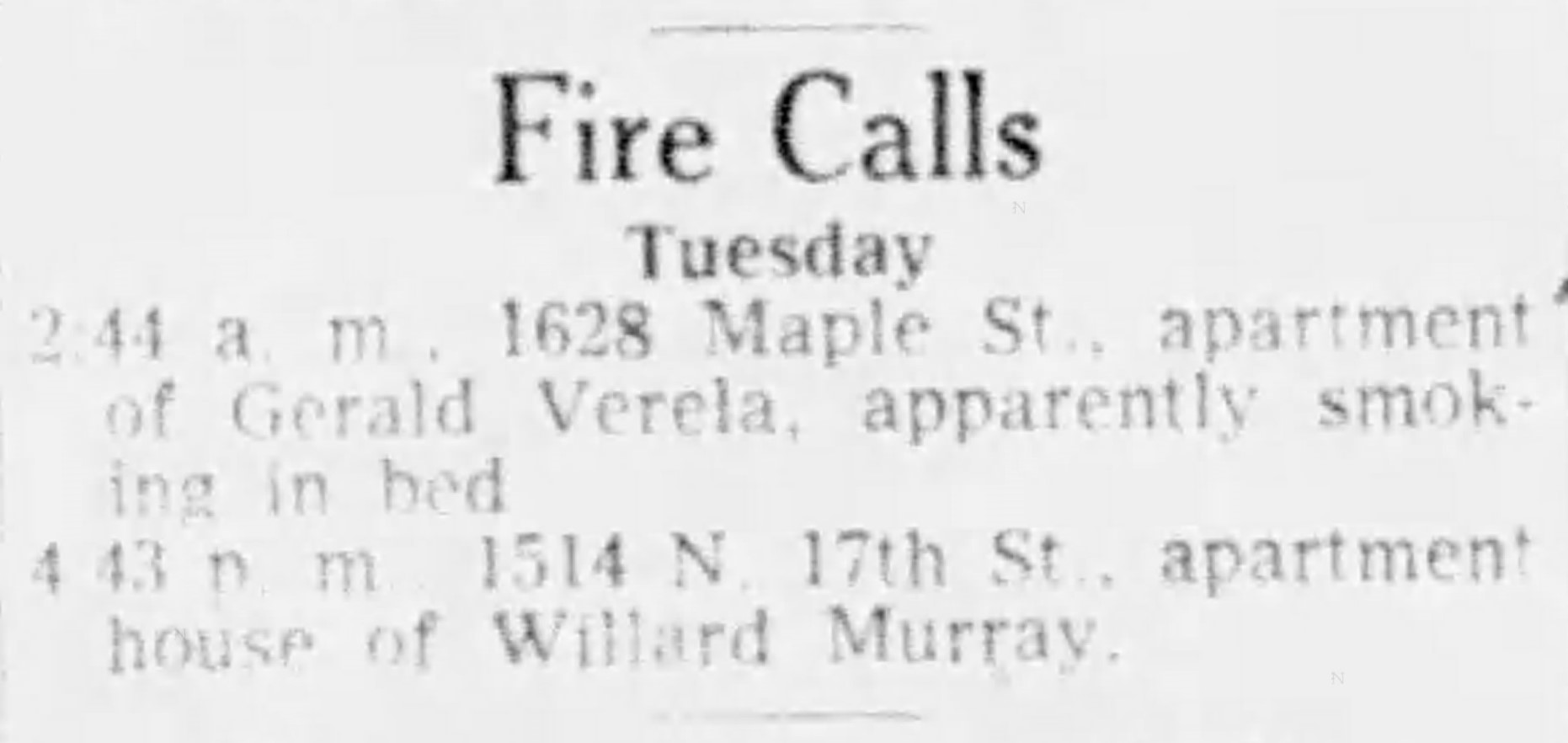
On May 28, 1963, Omaha firefighters responded to a reported fire at a duplex at 1514 N. 17th Street. It was a typical spring afternoon, temperatures in the mid-70s beneath partly cloudy skies. The neighborhood, more densely populated than today, was made up of apartments, duplexes, and modest single-family homes occupied by working-class families. Initial companies included Engine No. 4 and Aerial No. 2 from 16th & Nicholas, and Engine No. 14 and the District 2 Battalion Chief from 20th & Lake street. They arrived to a working fire.
Precise operational details have been lost to time, but contemporary accounts confirm the basement was fully involved and fire was pushing upward. Moments after arrival, an Omaha police officer warned Battalion Chief Joe Phalen that a baby might be upstairs. The operation shifted immediately—from fire attack to rescue.
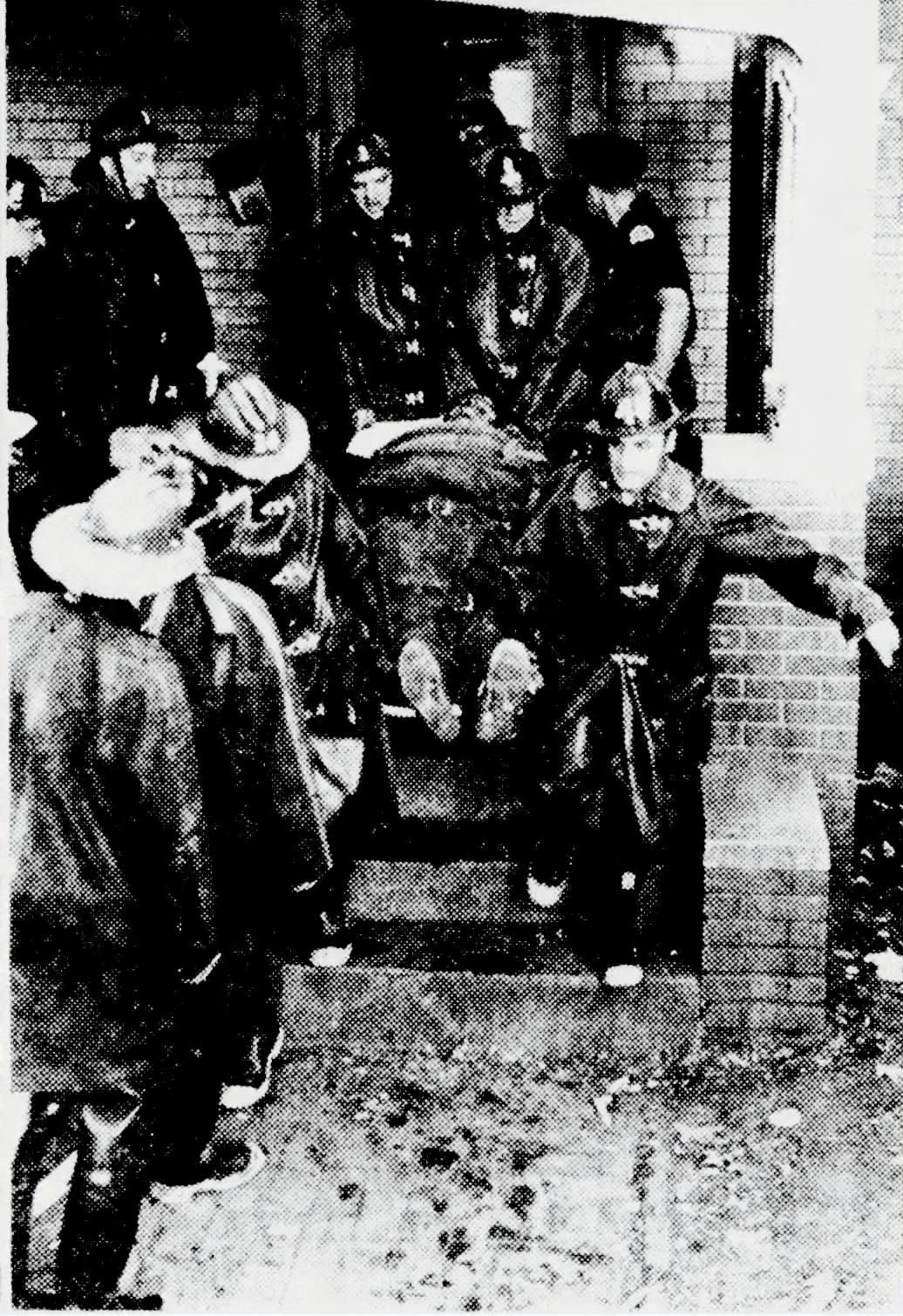
Within minutes, four occupants were removed from a second-floor apartment, all unconscious, suffering from severe burns and smoke inhalation. Kenneth and MaryAnn Kidder, both 35, and their two youngest children.
Reporters and photographers from the World-Herald arrived just before the rescues came down.
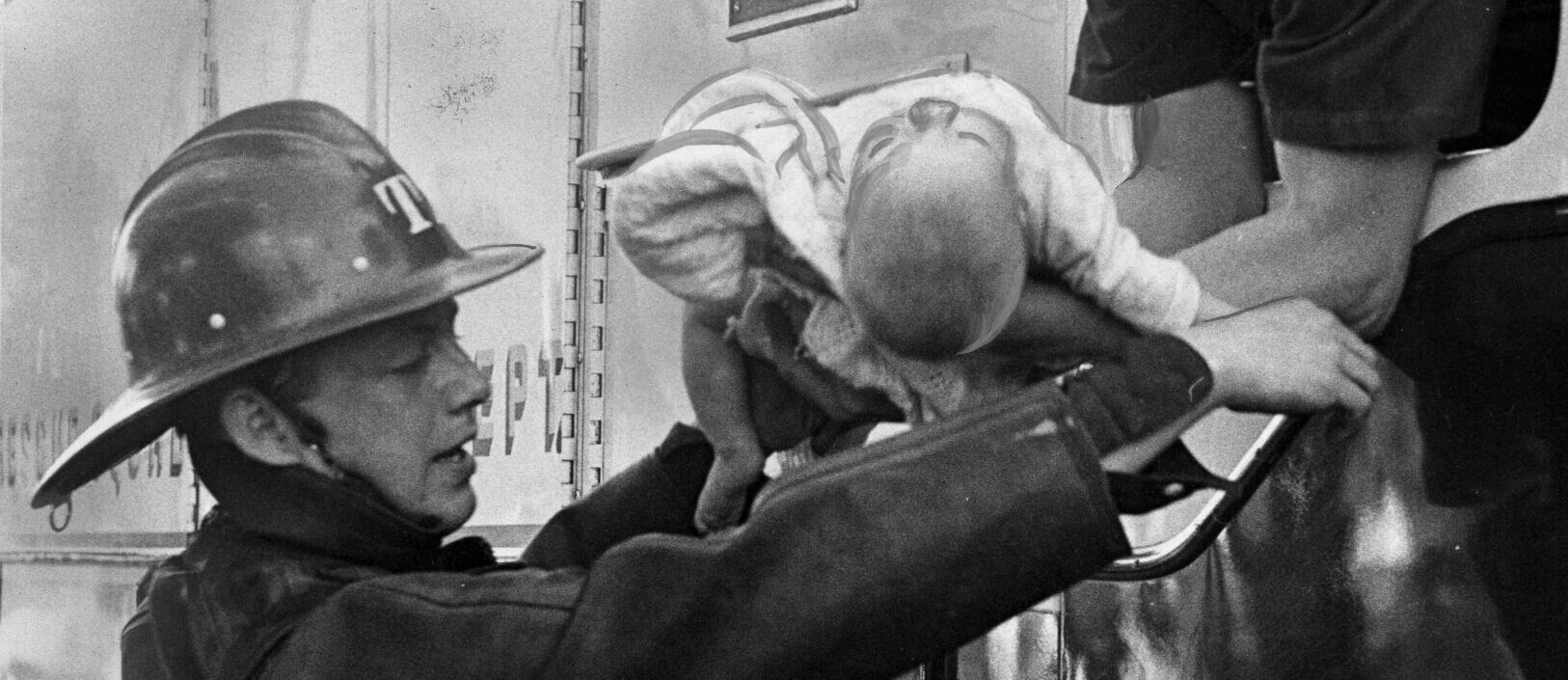
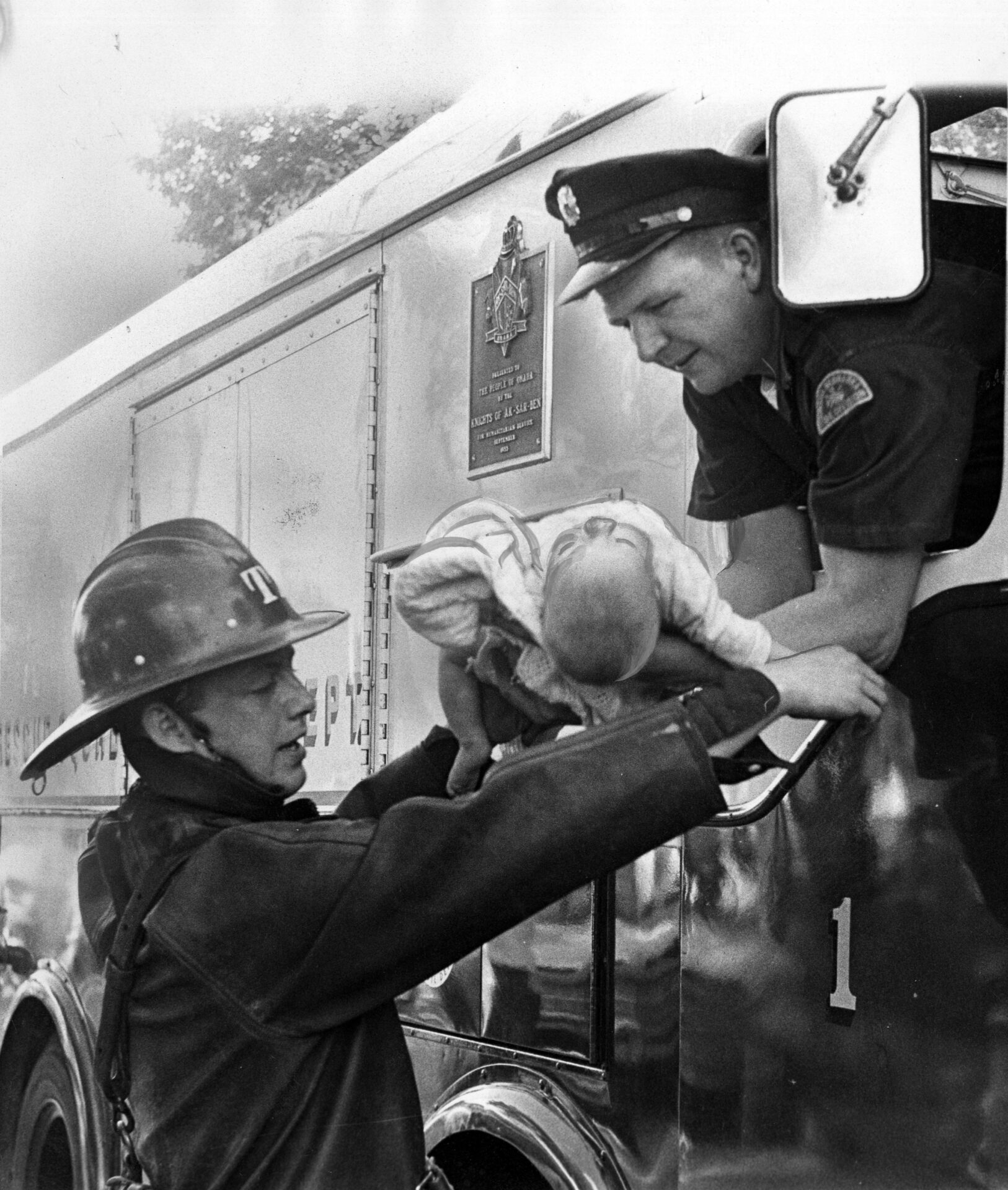
One photograph would come to define the story. Firefighter Pat Casey, of Aerial No. 2 stood at the top of a ground ladder at a second-story window when two-month-old Gregory Kidder was handed out to him. Casey descended quickly and carried the child to Rescue Squad No. 1, transferring the unconscious infant to Firefighter Bob Arendt. In that instant, the image was captured—one that would endure for decades (see cover of PH&L#19).
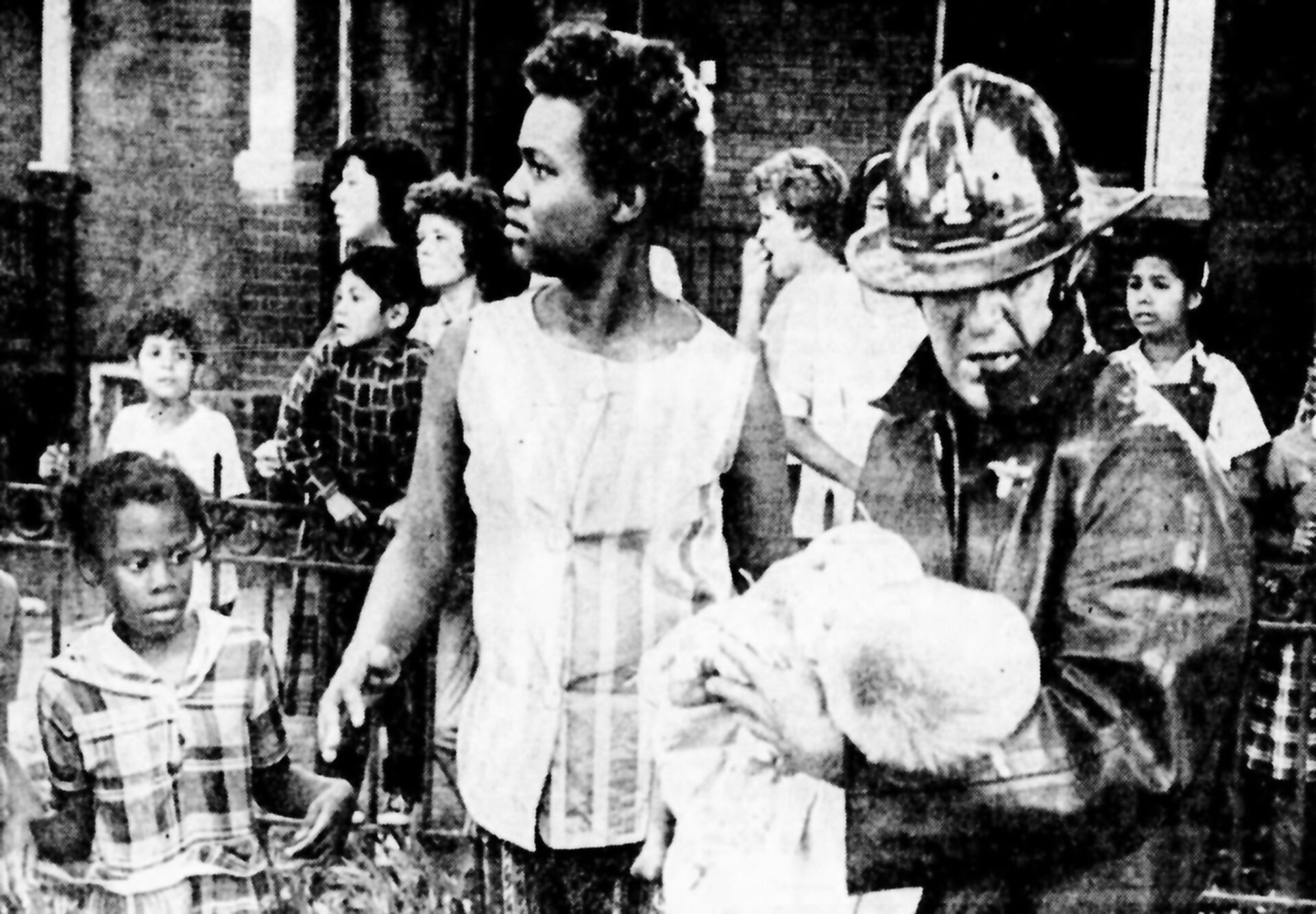
Another photograph shows Firefighter Walter Kojedski, of Engine No. 4, holding 18-month-old Michael Kidder, also believed to have been passed out through the same window. Around them, neighbors gathered in stunned silence. Kenneth and MaryAnn were removed on stretchers and transported to Douglas County Hospital. The children were taken to Children’s Hospital.
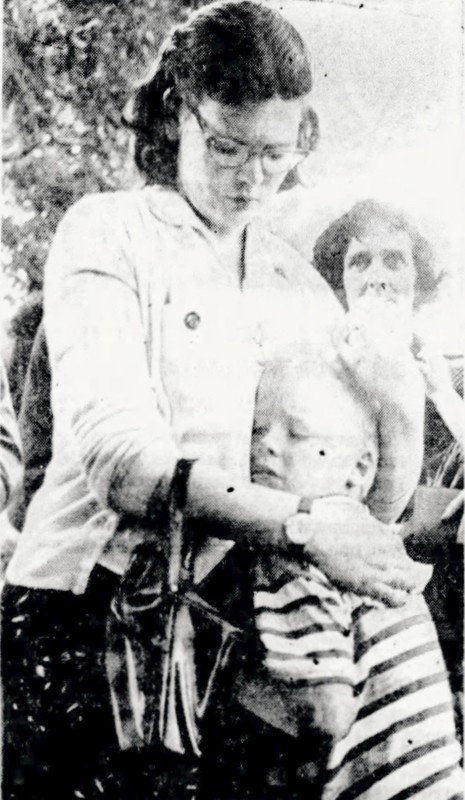
Nearby, two older brothers—Pat and Jeff, 13 and 8—had been outside “playing army” when the fire began. They would later be photographed being consoled by neighbors as the rescue unfolded.
The outcome was devastating.
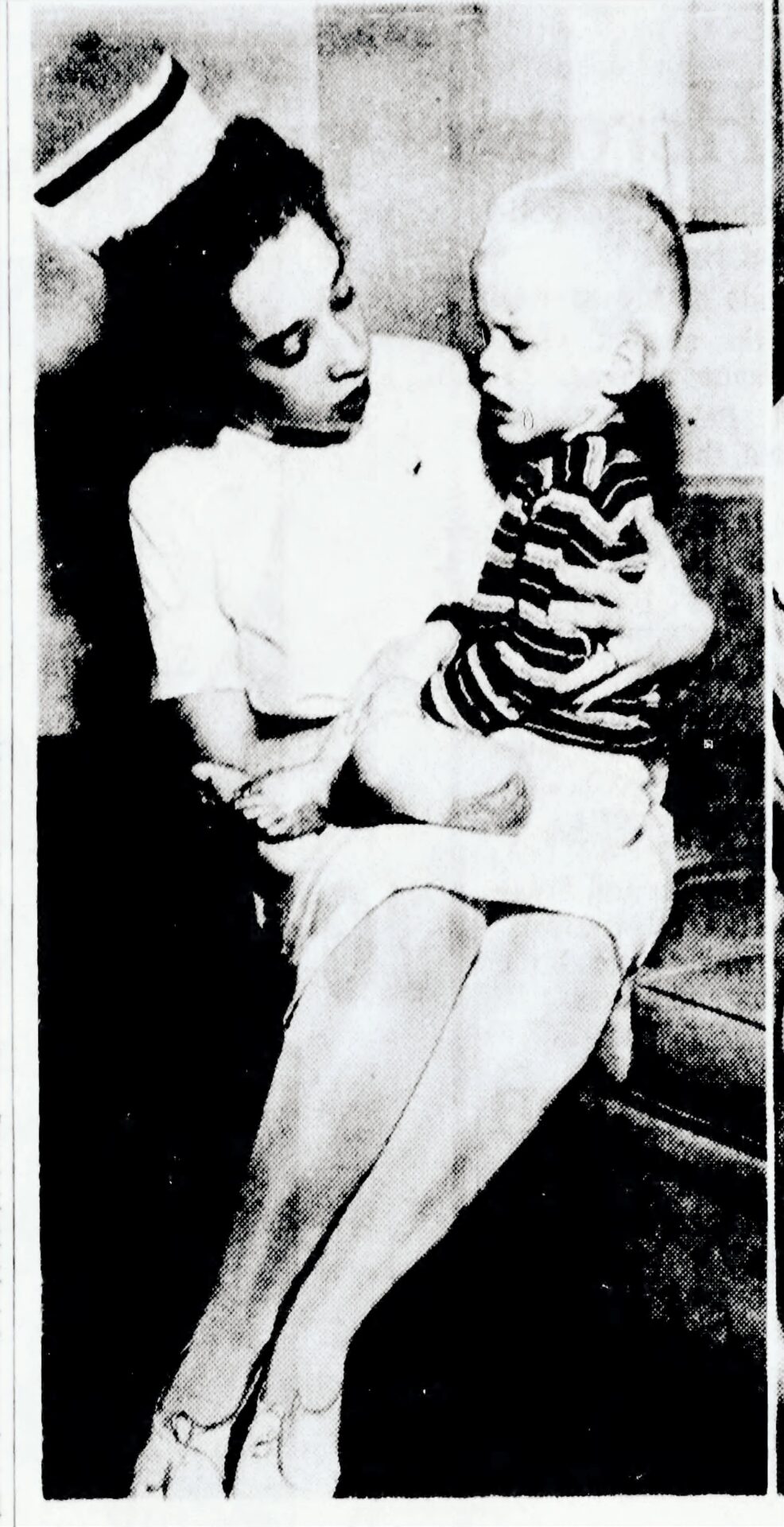
Kenneth Kidder died within hours, never regaining consciousness. MaryAnn briefly regained consciousness but died a week later. Gregory suffered minor burns and recovered fully. Michael’s injuries were far more severe. At 18 months old, he sustained second- and third-degree burns from his feet to the middle of his back. As he grew, he endured years of skin grafts.
But the physical injuries were only part of it.
Four boys were suddenly without parents, without a home, and without certainty about what came next.
In the days that followed, the brothers were separated. Pat and Jeff were placed at the Douglas County Youth Center. Gregory was sent to the Child Saving Institute. Michael remained at Children’s Hospital for extended treatment.
Kenneth’s brother, Charles Kidder, and his wife Ester—already raising eight children—stepped forward immediately. Living in Carter Lake and preparing to move into a larger home in South Omaha, they sought custody of all four boys. To them, the decision was simple. Charles told the World-Herald that the children were his blood, and that responsibility was clear. The court battle that followed was not.
Other relatives contested custody, some unwilling to take all four boys. The court declared the children dependent and placed them under guardianship while proceedings continued. For nearly two years, the brothers remained separated, moving between institutions—the Omaha Home for Boys, the Child Saving Institute, the Hattie B. Munroe Home, and Children’s Hospital. At one point, they were ruled ineligible for Nebraska foster care funding due to their recent move from Colorado.
Nearly two years later, the decision was finally made. Charles and Ester were awarded full custody.
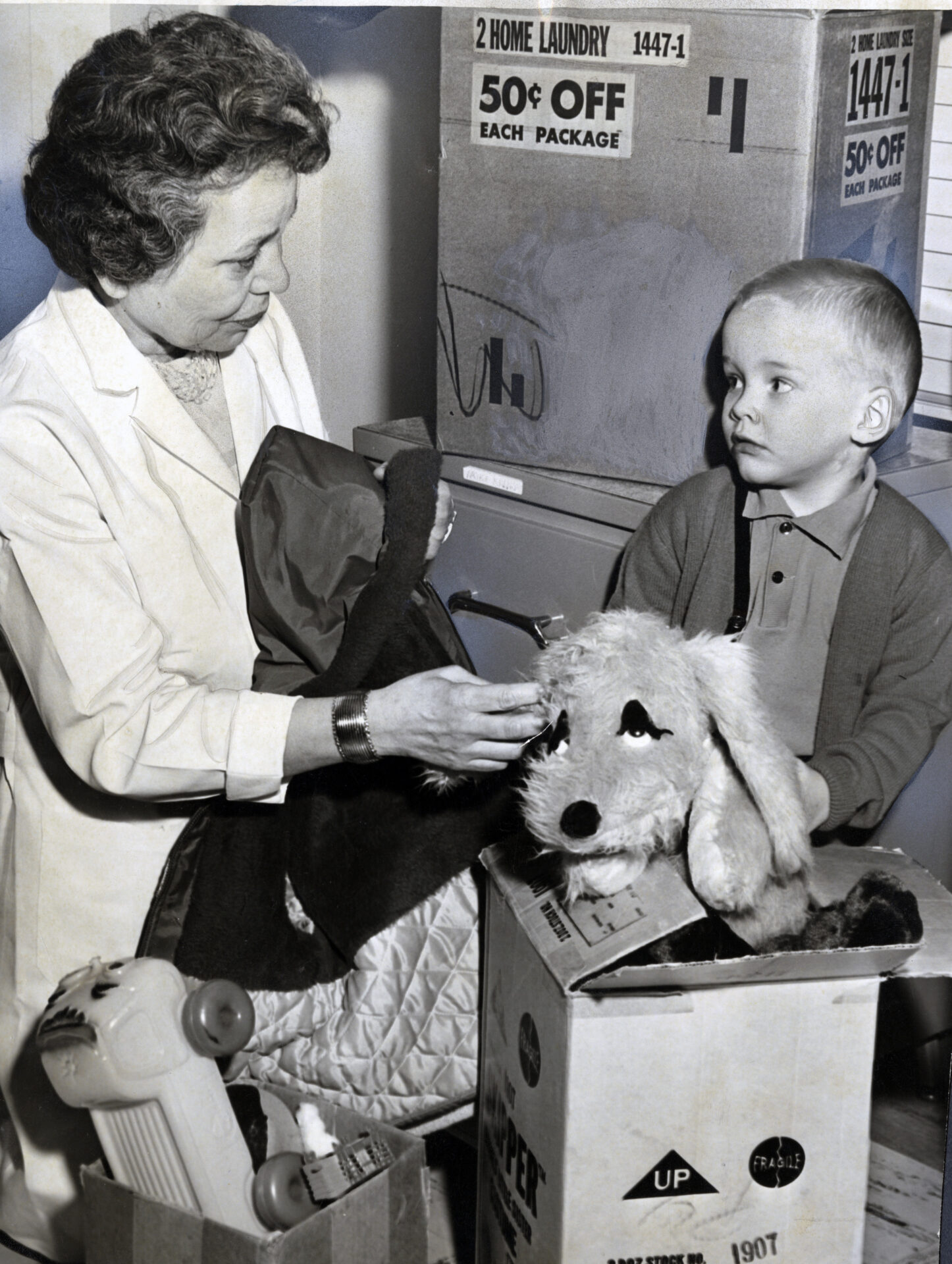
On March 23, 1965, Michael—after years of treatment—was released to join his brothers. Gregory followed soon after.The family was reunited.
For decades, the story remained fragmented—preserved in photographs, newspaper clippings, and fading memory. That changed in December 2025.
At Fire Station No. 10, Michael and Gregory Kidder sat down with Carol Casey, widow of Firefighter Pat Casey, and their son David. What began as a conversation about a firefighter became something far more.
As the discussion turned to the fire, Carol made an unexpected revelation: she had been there that day.
The realization was immediate. Michael and Gregory were speaking with someone who had witnessed the moment that saved their lives.
Carol explained she had worked near Station No. 4 and had stopped by that afternoon to see Pat. When the alarm sounded, she followed to the scene, arriving just before the victims were brought out. The scene, she recalled, was chaotic but controlled. It felt like it took forever—but in reality, it happened fast.
As photographs were spread across the table, she paused at one image—young Pat Kidder. She remembered his face clearly. He had been crying, she said, convinced his family was still inside and already gone.
The fire’s impact did not end that day.
Michael endured years of surgeries and lasting physical limitations. As a young adult, he struggled with addiction before entering recovery—a turning point that allowed him to rebuild his life. For the past 33 years, he has worked as a medical technician at CenterPointe Rehabilitation, just one block from where the fire occurred.
Gregory went on to work in construction, raising a family of his own.
Both men spoke of Charles and Ester as “Mom and Dad”—the people who gave them stability after unimaginable loss.
They also spoke of what was lost.
Their older brothers, Pat and Jeff—both now deceased—rarely spoke about the fire. The trauma of that day, and the years of separation that followed, stayed with them. Michael recalled recurring nightmares as a child—fire, smoke, and the sensation of being taken through a window. Family members later confirmed that he had indeed been rescued through a window covered with plastic.
Despite everything, they endured.
Ester once told a reporter that raising such a large family could be discouraging at times—but when the children told her they loved her, it made everything worthwhile.
At the center of the original request was Firefighter Pat Casey.
Pat joined the Omaha Fire Department in 1962 after serving in the U.S. Marine Corps as a communications specialist. A quiet man by nature, he rarely spoke about the job. His son would later recall that the calls that seemed to stay with him most were suicides.
Casey served primarily in downtown and Benson-area stations. In 1972, with eight children at home, he left the department after 11 years of service. He later opened Casey’s Nursery at 82nd & F Street.
Carol Casey remained closely connected to the fire service community, helping establish the Omaha Fire Department Auxiliary in the mid-1960s to support firefighters and their families.
Pat Casey passed away on July 9, 2025—the same day as his and Carol’s 65th wedding anniversary.
At the December meeting, Carol and David brought with them Casey’s fire helmet, still marked “A2.” For the Kidder brothers, holding it was like holding a piece of their own history.
What began as a simple request for a photograph became something far more.
It became a reconstruction of memory. A reconnection of lives. A reminder that the impact of a single fire does not end when the flames are extinguished.
The Omaha Firefighters Historical Society, and the Pioneer Hook & Ladder Quarterly, extend their gratitude to Michael and Gregory Kidder for sharing their story, and to Carol, David, and Maureen Casey for preserving the memory of Firefighter Pat Casey.
And to Kenneth and MaryAnn Kidder, their sons Pat and Jeff, and Firefighter Pat Casey—may they rest in peace.


Comments